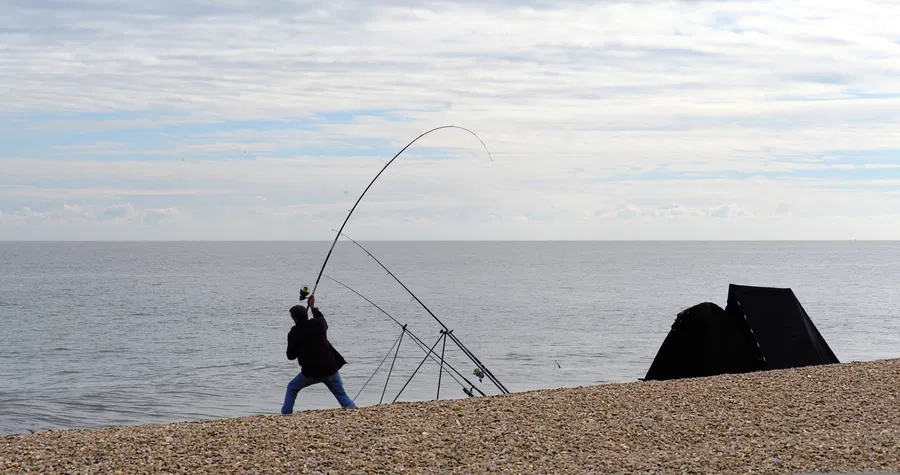

Hook set. Resistance. Rod bend.
And suddenly the peaceful fishing trip turns into controlled chaos.
Your heart jumps. The rod feels alive. The fish pulls harder than you expected — even if it’s not that big. For a beginner, this is the moment where everything either falls apart… or finally comes together.
Fighting and landing your first fish isn’t about strength. It’s about staying calm while something on the other end is doing the exact opposite.
If you understand what’s happening in those first few seconds, you’re already ahead of most beginners. If you’re building skills step by step, the full Fishing Basics Guide explains how hook sets, drag control, and landing technique all connect into one smooth system.
What Happens After You Set the Hook#
The second the hook connects, the situation changes.
Before that moment, you were waiting. Now, you’re managing tension.
Everything from this point forward is about control.
Why the Fish Suddenly Feels Stronger Than You Expected#
Even small fish feel powerful when they’re attached to a flexible rod and light line.
Part of that “strength” isn’t just the fish — it’s the rod bending, the drag slipping slightly, and the sudden tension transferring into your hands.
To a beginner, it can feel like you hooked something massive.
You probably didn’t.
But fish fight for survival, not for fun. Their first reaction is often a sharp pull or quick run. That sudden burst is what surprises most new anglers.
The key is not to match that energy with panic.
Let the rod bend. Let it absorb the shock. That bend is protecting your line and your hook.
The First Seconds That Decide Everything#
The first 3–5 seconds after the hook set are critical.
This is when beginners often:
- Lift the rod too high
- Reel too fast
- Or freeze completely
Instead, focus on one thing: steady pressure.
Keep the line tight. Keep the rod at a comfortable upward angle. Avoid sudden jerks.
If the fish runs, don’t try to stop it instantly. If your drag is set properly, it will slip just enough to prevent a break.
Fishing fights aren’t won immediately. They’re managed.
And if you stay calm in those first seconds, you dramatically increase your chances of landing that fish.
How to Control the Fish Instead of Panicking#
The first instinct when something pulls back is to pull harder.
That instinct is wrong.
Fishing isn’t a tug-of-war contest. The goal isn’t to overpower the fish — it’s to stay connected to it. Control beats aggression every time.
If you can stay calm while the fish isn’t, you’re already winning.
Keep Steady Pressure on the Line#
The single most important rule: never give slack.
Slack line is how fish escape. When tension disappears, the hook can fall out — especially if the fish shakes its head.
You don’t need maximum pressure. You need consistent pressure.
Keep the rod angled upward, maintain tension, and adjust smoothly if the fish changes direction.
If the line stays tight, the hook stays planted.
Let the Rod Bend — Don’t Fight It#
That bend in your rod? That’s not a problem.
It’s your shock absorber.
Beginners often panic when they see a deep bend and instinctively try to “help” by lifting higher or pulling harder. But the rod is designed to flex. That flex protects the line and keeps pressure steady.
If the rod is loaded smoothly and not jerking violently, you’re doing fine.
Trust the rod. It was built for this.
Why Smooth Movements Beat Sudden Pulls#
Quick, aggressive jerks create problems.
They increase the chance of:
- Snapping lighter line
- Tearing the hook loose
- Losing control near the shoreline
Instead, think rhythm.
Lift slightly. Reel down. Lift again. Maintain steady tension.
Smooth motion keeps the fight controlled. Sudden force turns it into chaos.
And chaos usually favors the fish.
Using Drag the Right Way#
Drag is one of those things beginners hear about… but don’t really understand until a fish starts pulling line.
Then suddenly that little knob matters a lot.
Drag isn’t there to make the fight dramatic. It’s there to protect your line, your rod, and your ego.
Used correctly, it turns panic into control.
What Drag Is Actually Doing During the Fight#
Drag controls how much force it takes for line to come off the reel.
When a fish makes a sudden run, the drag allows line to slip instead of snapping under pressure. Think of it as a pressure release valve.
If a fish pulls hard enough, you’ll hear the reel give that smooth “zzzz” sound. That’s not failure — that’s protection.
Proper drag:
- Slips under strong pressure
- Holds steady under moderate tension
- Prevents sudden break-offs
It keeps tension consistent without forcing you to muscle the fish.
Signs Your Drag Is Too Tight#
If your drag is too tight, you’ll notice:
- The rod bends deeply but no line slips
- Sudden hard runs feel violent
- You’re afraid something might snap
- Line breaks during sharp pulls
When drag is too tight, every fish movement transfers directly to the weakest part of your setup — usually the line or knot.
If it feels like there’s zero give in the system, loosen it slightly.
Fishing gear should flex and adjust, not feel like solid metal under strain.
Signs Your Drag Is Too Loose#
If your drag is too loose, you’ll notice:
- Line slips too easily with minimal pressure
- The fish takes long runs without resistance
- You struggle to gain line back
- The rod doesn’t load properly
Loose drag can make it difficult to control the fish, especially near the end of the fight.
The goal is balance.
You want enough resistance to control the fish, but enough flexibility to avoid snapping the line.
A good rule for beginners: set drag so that firm hand pressure on the line pulls it out smoothly — not freely, and not locked solid.
And if you’re unsure? Slightly loose is safer than too tight.
You can always tighten a little during the fight if needed.
How to Fight Fish Without Losing Them#
Once the hook is set and the fish is pulling, your job isn’t to overpower it.
Your job is to manage it.
Think of it less like a fight and more like a negotiation. The fish pulls. You apply steady pressure. The fish adjusts. You stay calm.
There’s a rhythm to it — and once you feel that rhythm, everything becomes smoother.
Reeling Down and Lifting Up (The Basic Rhythm)#
This is the most important movement pattern in fighting a fish.
- Lift the rod slightly to gain line under tension.
- Lower the rod while reeling to take up slack.
- Repeat.
Lift. Reel. Lift. Reel.
That’s it.
The rod lift moves the fish closer. The reeling while lowering prevents slack. This cycle keeps steady pressure without sudden jerks.
If you try to reel while the rod is high under heavy tension, you’re just stressing the reel. If you lower the rod without reeling, you introduce slack.
Smooth rhythm wins.
What to Do When the Fish Makes a Run#
At some point, the fish may decide it strongly disagrees with your plan.
You’ll feel a sudden surge. The drag may start slipping.
Don’t panic. Don’t clamp down. Don’t try to stop it instantly.
Let the drag do its job.
Keep the rod angled upward and maintain tension, but allow line to slip under controlled pressure. Once the run slows, resume the lift-and-reel rhythm.
Trying to stop a strong run by force often ends in a broken line.
Controlled patience lands more fish than stubborn resistance.
Keeping Fish Away From Structure#
Fish love structure.
Rocks. Docks. Weed beds. Submerged branches. These are all places where your line can get cut or tangled.
If a fish heads toward cover, apply steady side pressure — not straight upward force. Angle the rod away from the structure to guide the fish into open water.
Side pressure often changes the fish’s direction more effectively than pulling straight up.
This is where calm thinking matters most.
The fish is reacting on instinct. You shouldn’t be.
Keep tension steady. Adjust angle. Stay controlled.
That’s how you win without rushing.
Bringing the Fish Closer#
This is the part where beginners lose more fish than anywhere else.
Not at the hook set.
Not during the first run.
But right at the end.
When you can see the fish, adrenaline spikes again. It feels close. It feels almost done. And that’s exactly when mistakes happen.
Landing a fish is not about rushing the finish. It’s about staying controlled until the very last second.
When to Start Guiding Instead of Pulling#
As the fish gets closer, stop thinking about pulling it in.
Start thinking about guiding it.
Keep the rod angled and use steady side pressure to lead the fish toward you. If it turns, adjust. If it dives, maintain tension and let it tire.
Pulling straight upward at this stage usually creates unnecessary strain — especially with lighter line.
You’re steering now, not lifting.
Let the fish swim in small circles if it needs to. As long as tension stays steady, you’re in control.
Why the Final Moments Matter Most#
Fish often make one last surge near shore or boat.
It’s almost predictable.
Just when you think, “Got it,” the fish decides it disagrees.
If your drag is too tight, this is when line breaks.
If you lift too high, this is when rods snap.
If you rush, this is when hooks pop free.
Stay patient.
Let the fish make that last move. Keep steady pressure. Don’t rush the final few feet.
Those seconds matter more than the entire fight before them.
Staying Calm When the Fish Surfaces#
Seeing the fish for the first time is exciting. Sometimes it’s smaller than you imagined. Sometimes it’s bigger.
Either way, stay calm.
Don’t jerk the rod upward in excitement. Don’t try to “swing” the fish out of the water unless it’s very small and your gear is heavy enough.
Keep the rod bent. Maintain tension. Prepare to land the fish smoothly.
The fight isn’t over until the fish is secured.
And many beginners learn that lesson the hard way — once.
After that, they slow down.
How to Land the Fish Safely#
Getting the fish close is only half the job.
Landing it correctly is what turns “almost” into “done.”
This is where beginners either stay smooth… or suddenly try to lift the fish like it’s a grocery bag.
Don’t.
Landing is controlled and deliberate. Not rushed.
Landing by Hand (Small Fish Only)#
If the fish is small and your gear is strong enough, you can guide it close and carefully grab it by hand.
For many freshwater species, a gentle grip around the body (avoiding the gills) works fine. With very small fish, you may simply lift them from the water if your rod and line are strong enough.
But this is important:
Small fish only.
If there’s real weight on the line, don’t try to swing it up like a trophy photo from 1997.
Bring it close. Support it properly.
When and How to Use a Net#
A landing net dramatically increases your success rate.
Once the fish is tired and close, guide it toward the net head-first. Don’t stab at the fish with the net. Let the fish glide into it.
Keep tension steady while someone (or you) scoops smoothly underneath.
Head-first matters because fish can’t easily swim backward. If you chase the tail, you’ll create chaos.
Netting is not about speed. It’s about timing.
Wait for the right moment — when the fish is calm and under control.
Why Lifting With the Rod Can Break It#
This is one of the most common beginner mistakes.
When a fish is near shore or boat, many beginners lift the rod straight up to “finish it.”
That’s called high-sticking.
Rods are designed to bend under load along their length — not to support heavy vertical weight at a sharp angle. Lifting a fish straight up with the rod tip high puts extreme stress on the upper section.
That’s how rods snap.
If the fish is large enough to matter, use a net.
If it’s small enough to lift, keep the rod angle reasonable and support the fish quickly.
Rods fight fish. They’re not cranes.
Remember that, and your gear will last a lot longer.
Common Beginner Mistakes While Landing Fish#
Most lost fish don’t happen because the fish was “too strong.”
They happen because the angler rushed.
The final seconds of the fight are where excitement overrides technique. And technique always loses when excitement takes over.
Let’s clean that up.
Trying to Win Too Fast#
You see the fish. It’s right there. You think, “Done.”
And that’s exactly when it isn’t.
Beginners often try to end the fight the moment the fish surfaces. They pull harder. Reel faster. Lift higher.
Fish sense sudden pressure changes. That last aggressive pull often triggers a final burst — and if your drag is tight or your line is light, that burst can end the fight immediately.
Slow down at the end, not speed up.
If the fish is close, stay steady. Let it tire. Control beats urgency.
High-Sticking the Rod#
High-sticking means lifting the rod too high — often almost vertical — while the fish is still under load.
It looks dramatic.
It also breaks rods.
When the rod angle becomes too steep, all the pressure concentrates near the tip instead of distributing through the entire blank. That’s how rods snap even with moderate fish.
Keep the rod at a reasonable upward angle. Don’t lift it straight overhead under heavy tension.
If you need the fish higher, lower the rod slightly and use a net instead.
Rods are flexible tools — not lifting poles.
Grabbing the Line Instead of Controlling the Fish#
When the fish gets close, beginners sometimes grab the line to “secure” it.
That’s risky.
Pulling directly on the line removes the rod’s shock absorption. Any sudden movement from the fish transfers instantly to the weakest point — usually your knot.
Instead, maintain rod tension while bringing the fish close. Only grab the line carefully if absolutely necessary and under low tension.
The rod is your protection system. Don’t bypass it at the worst possible moment.
Landing fish isn’t about aggression.
It’s about staying calm longer than the fish does. And once the fish is secure, the next step matters just as much—handle it properly using the calm, safe method explained in How to Safely Remove a Hook from a Fish.
What Fighting Your First Fish Teaches You#
Your first real fight with a fish feels chaotic.
Your hands shake a little. Your heart beats faster. You’re not sure if you’re doing everything right — but you’re trying.
And that moment teaches more than any guide ever could.
Why Patience Beats Strength#
At first, it feels like strength should matter.
The fish pulls. You want to pull back harder.
But very quickly you realize something important: the fish doesn’t lose because you’re stronger. It loses because you stay steady.
Patience keeps tension consistent.
Patience prevents rushed movements.
Patience stops panic from ruining good technique.
Fishing has a way of rewarding calm behavior. The angler who stays controlled usually lands more fish than the one who tries to dominate them.
Strength helps.
Patience wins.
How Confidence Builds With Every Catch#
The first fish you land feels different.
Not because it’s big.
Not because it’s rare.
But because you managed the entire process.
You detected the bite.
You set the hook.
You controlled the fight.
You landed it.
That chain of actions builds confidence faster than anything else in fishing.
After that first success, the next fight feels less intimidating. You recognize the rhythm. You trust the rod. You understand the drag.
And suddenly, what once felt chaotic feels manageable.
Fighting and landing your first fish isn’t about perfection.
It’s about connection — maintaining tension, staying calm, and letting the rod do its job.
Stay steady. Avoid rushing the final seconds. Trust the rhythm of lift and reel.
And when that fish finally slides onto the bank or into the net, you’ll realize something important:
You didn’t overpower it.
You outlasted it.