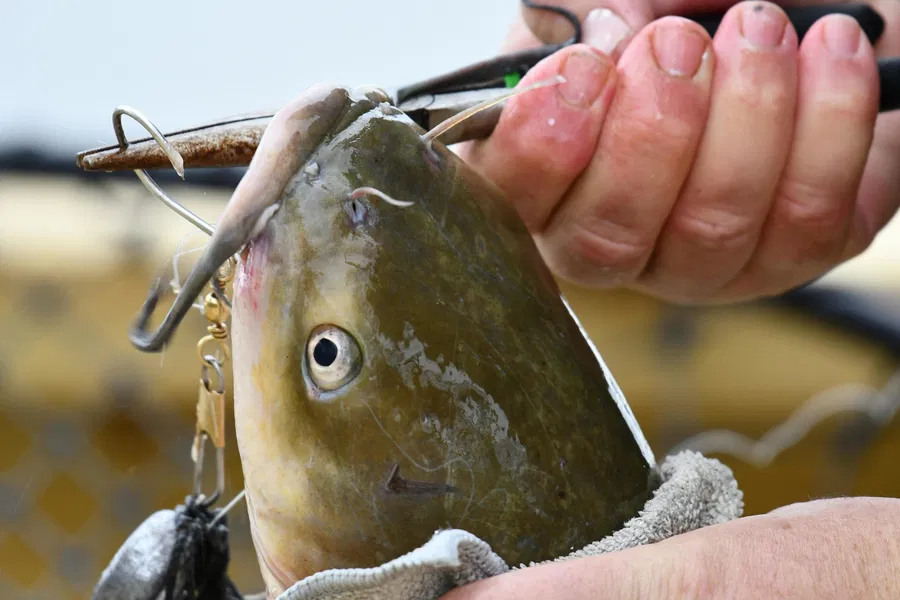

Removing a hook from a fish is one of those moments nobody talks about when you first start fishing. You imagine the cast. The strike. The fight. Maybe even the photo.
What you don’t picture is standing there thinking, “Okay… now what?”
And that moment matters more than most beginners realize. If you’re working through the core skills step by step, the full Fishing Basics Guide explains how hook removal fits into the bigger sequence of landing, handling, and releasing fish properly.
Whether you’re releasing the fish or keeping it, how you remove the hook affects the outcome — for the fish and for your fingers. Because yes, beginners often discover something important: fish move a lot more when you’re holding a hook near their mouth.
Let’s make sure your first hook removal doesn’t turn into a panic session.
Why Safe Hook Removal Matters#
Hook removal is one of those quiet skills that separates “I caught a fish” from “I know what I’m doing.”
It’s not dramatic. There’s no splash, no bend in the rod, no cheering. But it’s the part where you prove you actually respect the process.
Because once the fish is in your hands, the fight is over — and responsibility begins.
Protecting the Fish (Even If You’re Keeping It)#
A fish that’s been hooked is already stressed. Its heart rate spikes. Its body is producing stress hormones. Add rough handling and careless hook removal, and you multiply that stress.
If you practice catch-and-release, careful hook removal directly improves survival rates. A clean, controlled removal keeps damage minimal and recovery faster.
Even if you’re keeping the fish, proper removal still matters. Less tissue damage means less bleeding. Less bleeding means better meat quality. And frankly, it’s just the right way to handle something you chose to catch.
The goal isn’t speed. The goal is control.
Protecting Your Hands#
Beginners often focus entirely on the fish. Experienced anglers focus on the hook.
Because that hook is now loose, exposed, and extremely sharp — and the fish is not done moving just because it’s out of the water.
Fish twist. They thrash. They perform one final dramatic flop exactly when your fingers are closest to the pointy end.
One careless second and now you’re the one Googling “how to remove a hook from a human.”
Keeping your hands clear of the hook point, controlling the fish first, and using tools when needed isn’t paranoia — it’s common sense learned the hard way by many before you.
Why Rushing Causes More Harm#
The awkwardness beginners feel is normal. The fish feels slippery. Your grip feels uncertain. You want it over quickly.
That’s when mistakes happen.
Rushing leads to pulling sideways instead of backing the hook out. It leads to squeezing too hard. It leads to torn tissue or a hook buried deeper than it was before.
Take five extra seconds. Secure the fish. Identify how the hook entered. Reverse that path calmly.
Fishing rewards patience in every stage — and hook removal is no exception.
Basic Tools That Make Hook Removal Easier#
You can remove a hook with bare hands.
You can also open a soda can with your teeth.
One of those is smarter than the other.
Simple tools make hook removal faster, safer, and far less chaotic — especially when the fish is still deciding whether it wants a second round.
Needle-Nose Pliers#
If you carry only one tool, make it needle-nose pliers.
They let you grip the hook firmly without putting your fingers anywhere near the point. You can rotate the hook cleanly, back it out the same way it entered, and maintain control even if the fish moves.
For small to medium fish, pliers are usually all you need.
Grip the bend of the hook — not the line, not the fish’s lip — and reverse it smoothly.
No jerking. No twisting like you’re unscrewing a bolt.
Just steady pressure and controlled motion.
Hook Removers and Dehooking Tools#
Hook removers (also called dehookers) are especially helpful for beginners or for fish with small mouths and sharp teeth.
They allow you to slide down the line to the hook and disengage it without fully handling the fish. This is useful for:
- Small panfish
- Fish you plan to release quickly
- Situations where the hook is visible but awkward to reach
They’re not mandatory, but they reduce fumbling — and fumbling is what turns simple removals into messes.
Think of them as training wheels for calm hook control.
When You Should Use Gloves#
Gloves are useful in a few specific situations:
- Fish with sharp teeth (like pike)
- Fish with abrasive mouths (like bass)
- Saltwater species with rough scales
- Cold weather when your fingers are stiff
What gloves are not for: squeezing fish harder because you feel protected.
Grip should still be firm but gentle. Gloves protect you — they don’t give you permission to crush.
If the fish is small and calm, bare wet hands are often fine.
If the fish looks like it could file down your fingerprints, wear gloves.
Simple rule.
Because the only thing worse than a bad hook removal… is doing it twice — once for the fish and once for yourself.
How to Remove a Hook From a Fish (Step-by-Step)#
This is the part where calm matters most.
You don’t need speed. You don’t need strength. You need control.
Hook removal follows a simple principle: reverse what happened during the hook set.
That’s it.
Step 1: Stay Calm and Control the Fish#
Before touching the hook, secure the fish.
If it’s small, gently but firmly hold it around the body. If it’s larger, support its weight properly and avoid squeezing the gill area.
If the fish is thrashing, wait a second. A fish that’s mid-flop is not ready for precision work.
Control first. Hook second.
Most accidents happen when someone reaches for the hook before the fish is stable.
Step 2: Identify Where the Hook Is Placed#
Look closely.
Is the hook through the lip? The corner of the mouth? Slightly deeper but still visible?
Understanding the angle matters. The hook went in a specific direction — and it needs to come out the same way.
Don’t pull sideways. Don’t twist randomly. That increases damage.
Take one second to see how it entered. Then plan the reverse path.
Step 3: Back the Hook Out the Way It Entered#
Grip the bend of the hook with pliers.
Rotate gently in the opposite direction of entry. Apply steady pressure backward along the original path.
If the hook has a barb, you may need a slight push forward to disengage tension before backing it out.
Slow. Controlled. Direct.
The goal is to remove the hook cleanly, not wrestle it free.
Step 4: Support the Fish Properly During Removal#
While removing the hook, make sure the fish’s body is supported.
Avoid letting it hang vertically for long periods — especially larger fish. That puts strain on internal organs.
If possible, keep the fish low over water or a soft surface in case it slips.
The calmer you are, the calmer the fish tends to become.
And when the hook comes out smoothly, you’ll notice something:
It wasn’t complicated.
It just required patience.
What to Do If the Hook Is Deep#
This is the moment that makes beginners uncomfortable.
You look inside the mouth and the hook isn’t sitting neatly on the lip. It’s deeper. Maybe past the tongue. Maybe barely visible.
Your first instinct might be: “I have to get it out.”
Not always.
Sometimes the smartest move is knowing when not to pull.
When Not to Pull It Out#
If the hook is deeply embedded in the throat or gut area and you cannot clearly see or access it without force, do not start digging.
Pulling blindly can:
- Tear delicate tissue
- Cause heavy bleeding
- Increase stress dramatically
If removing the hook requires force or twisting beyond simple backing-out motion, it may do more harm than good.
In many cases, especially with catch-and-release, leaving a deeply embedded hook in place is safer than aggressive removal.
It feels counterintuitive — but controlled restraint is often the better decision.
Cutting the Line Instead#
If the hook is too deep to remove safely, cut the line as close to the hook eye as possible.
Leave the hook in place.
Research and field experience show that many fish can expel or naturally corrode hooks over time, especially non-stainless hooks.
The key is minimizing additional damage.
Cut. Release gently. Let the fish recover.
Why Deep Hook Removal Can Do More Damage#
The deeper the hook, the more sensitive the tissue.
Aggressive attempts at removal can cause:
- Excessive bleeding
- Internal injury
- Reduced survival chances
As a beginner, your job isn’t to perform surgery. It’s to minimize harm.
If you can remove it cleanly and safely, do so.
If you can’t, cut the line and move on.
Fishing includes responsibility.
And sometimes the responsible choice is knowing when to stop.
Removing Treble Hooks Safely#
Treble hooks are where things get interesting.
One hook point in the fish. Two more points waiting for opportunity.
Treble hooks aren’t dangerous because they’re sharp. They’re dangerous because they’re unpredictable — especially when the fish is still moving.
Calm control matters twice as much here.
Controlling Multiple Hook Points#
Before touching the hook, make sure the fish is stable.
Treble hooks often tangle in lips, gill plates, or even outside the mouth. First, check where all hook points are. Sometimes only one point is embedded — the others are free.
Those free points are your real threat.
If possible, use pliers to secure the embedded point while keeping your hands away from the loose ones. If the fish is small and calm, controlling its body firmly reduces sudden movement.
Never assume you know where all points are without looking.
Because treble hooks love surprises.
Using Pliers the Right Way#
With trebles, pliers are not optional — they’re essential.
Grip the bend of the embedded hook point. Apply steady backward pressure, reversing the entry angle.
If the fish is hooked on multiple points, remove one at a time. Don’t twist wildly trying to free everything at once.
If necessary, cutting one hook point with proper cutters can make removal far easier and safer.
Controlled movements. No jerking.
Treble hooks reward precision and punish impatience.
Protecting Yourself From Swinging Hooks#
Fish with treble hooks often thrash more aggressively — especially when they feel pressure near their mouth.
Keep the fish low and over water or a soft surface. Maintain firm control before manipulating the hook.
Never position your hand behind an exposed hook point.
If the fish starts shaking mid-removal, pause. Regain control. Continue only when stable.
Because the only thing worse than a deeply hooked fish…
…is a deeply hooked angler.
Common Beginner Mistakes When Removing Hooks#
Hook removal isn’t complicated.
But under pressure — slippery fish, sharp metal, adrenaline still in your system — beginners tend to improvise.
Improvisation is how simple removals turn into chaos. Many of these rushed decisions show up again in other areas of fishing — you’ll see the same patterns explained in Common Beginner Fishing Mistakes (and How to Avoid Them).
Let’s eliminate the usual mistakes.
Using Bare Hands#
Yes, you can remove hooks with your fingers.
You can also grab a cactus carefully.
But hooks are sharp, and fish move unpredictably. One sudden twist and now the hook is in your hand instead of the fish’s mouth.
Using pliers gives you:
- Distance from the hook point
- Better control
- Less panic if the fish thrashes
Bare hands are fine only when the hook is clearly visible, shallow, and the fish is fully controlled.
If there’s any doubt — use tools.
Your future self will appreciate it.
Twisting Instead of Backing the Hook Out#
Hooks go in one direction.
They should come out the same way.
Beginners often twist the hook sideways or pull randomly when it doesn’t come free immediately. That increases tissue damage and can make the hook harder to remove.
The correct method is simple: Follow the entry path in reverse.
If it feels stuck, adjust the angle slightly — don’t force it.
Controlled pressure removes hooks. Twisting creates problems.
Letting the Fish Flop on Hard Surfaces#
Dropping a fish on rocks, concrete, or a boat deck while trying to remove a hook causes unnecessary harm.
Fish have protective slime coatings. Hard, dry surfaces damage that layer and increase infection risk — especially if you’re releasing the fish.
Keep the fish:
- Over water when possible
- Over grass or a soft surface
- Low to the ground to prevent injury if it slips
Control first. Remove hook second.
Fishing isn’t just about catching.
It’s about handling responsibly — even when the exciting part is over.
After the Hook Is Out#
Once the hook is removed, most beginners relax.
Don’t.
This last stage is just as important as everything before it — especially if you’re releasing the fish.
A fish that swims away strongly has a much higher chance of survival than one that drifts off like it just ran a marathon.
Give it a proper finish.
Reviving the Fish Before Release#
If the fish looks tired — slow gill movement, weak body control, rolling sideways — don’t just toss it back.
Hold the fish gently in the water, upright. Support its body. Let water flow naturally through its gills.
Do not push it back and forth aggressively. That can damage gills. Just keep it facing into the current if there is one.
Wait until the fish begins to push away on its own.
When it kicks free strongly, that’s your sign.
If it drifts, it wasn’t ready.
Patience here matters more than speed.
Checking for Visible Injury#
Before release, take one second to look.
Is there excessive bleeding? Is the hook removal clean? Is the fish breathing normally?
Most lip-hooked fish recover quickly. Deep-hooked fish may need more time.
If you’re keeping the fish, handle it efficiently and respectfully. If releasing, minimize air exposure and get it back into water quickly.
Every second out of water increases stress.
Quick photo? Fine.
Extended photoshoot? Not so much.
Handling Fish With Respect#
Whether you release or keep your catch, how you handle it reflects your skill.
Wet your hands before touching the fish to protect its slime coating. Avoid squeezing the belly. Don’t stick fingers into gills unless you truly know proper handling techniques for that species.
Fishing isn’t just about the thrill.
It’s about responsibility.
A calm hook removal. A controlled release. A clean process.
That’s what separates someone who catches fish from someone who understands fishing.
What Safe Hook Removal Teaches You#
Hook removal doesn’t look impressive.
There’s no splash. No bent rod. No cheering.
But it quietly teaches one of the most important lessons in fishing.
Control matters more than excitement.
Patience Over Panic#
The moment a fish is in your hand with a hook exposed, panic is the enemy.
Panic makes you rush.
Rushing makes you force.
Force creates damage.
Safe hook removal teaches you to slow down — even when your adrenaline is still up from the fight.
You learn to secure first.
Assess second.
Act third.
Fishing rewards that order in every stage.
And once you’ve calmly removed a hook from a thrashing fish without injury — to the fish or yourself — something shifts.
You stop reacting.
You start managing.
Confidence Through Control#
The first time you remove a hook cleanly, it feels simple.
The fifth time, it feels automatic.
That’s when confidence builds.
Not loud confidence. Quiet confidence.
The kind that comes from knowing:
- You can handle the fish properly
- You won’t panic if it thrashes
- You understand the mechanics
Fishing isn’t just casting and catching.
It’s handling responsibly from start to finish.
Safe hook removal proves something important:
You’re not just catching fish anymore.
You’re in control of the entire process.
Removing a hook safely may not be the most exciting part of fishing — but it’s one of the most important.
Anyone can cast.
Anyone can get lucky with a bite.
But handling a fish calmly, removing the hook cleanly, and finishing the process without harm — that’s skill.
The more you practice it, the more natural it becomes. Your movements get smoother. Your grip gets steadier. Your reactions slow down instead of speeding up.
And that’s when you realize something:
Fishing isn’t just about catching.
It’s about control from the first cast to the final release.
Stay calm. Use the right tools. Back the hook out the way it entered.
Do that consistently — and you won’t just be someone who catches fish.
You’ll be someone who knows how to handle them.