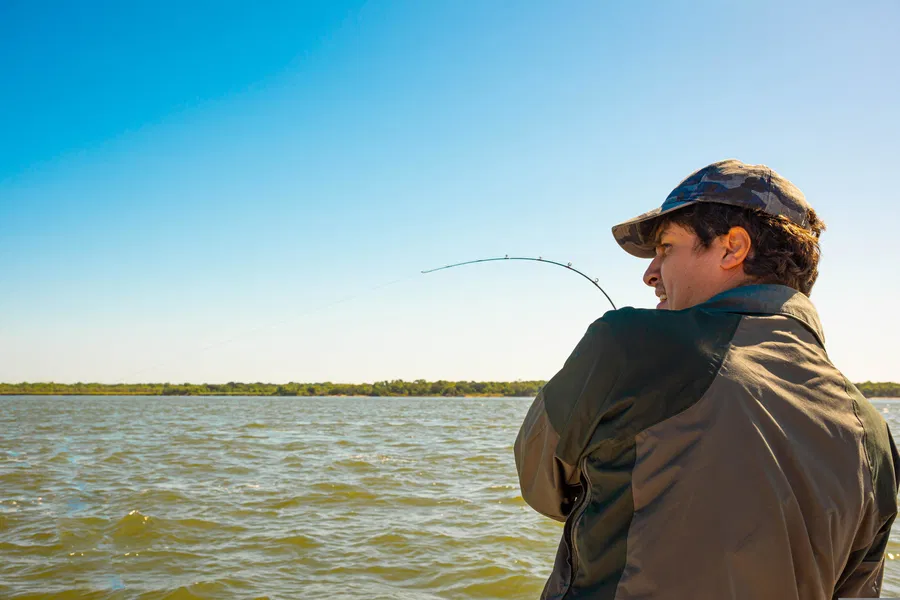

Setting the hook is one of those moments in fishing that feels bigger than it actually is.
You wait. You focus. You feel something different. And then — this split second where your brain hesitates and your body wants to react.
That tiny gap between bite and reaction? That’s where most beginner mistakes happen.
Some anglers swing like they’re trying to break the rod in half. Others barely move at all. Both usually end the same way — the fish wins.
The truth is, setting the hook isn’t dramatic. It’s precise. And once you understand what it’s really supposed to do, it becomes much less mysterious. If you’re building your core beginner skills step by step, the complete Fishing Basics Guide shows how hook setting fits into the bigger picture of setup, casting, and landing fish.
What “Setting the Hook” Actually Means#
Setting the hook simply means creating firm, immediate tension so the hook point penetrates the fish’s mouth.
It’s not a performance move. It’s a mechanical one.
When a fish takes the bait, there is often slack in the line. That slack must disappear instantly. A proper hook set removes slack and transfers controlled force through the rod into the hook.
That’s the entire goal.
Why Hook Setting Is About Tension, Not Strength#
Beginners often confuse force with effectiveness.
A powerful, explosive swing feels satisfying — but it doesn’t automatically increase your hook-up rate. In fact, too much force can tear soft tissue, bend lighter hooks, or snap thin line.
Hook setting works best when tension builds quickly and smoothly.
Think firm and controlled, not violent.
If the line is tight and you feel steady pressure, you may only need a short, decisive lift of the rod. If there’s slack, remove it first — then apply pressure.
It’s about connection, not aggression.
The Moment Between Bite and Reaction#
There’s always a brief pause after you detect a bite.
Sometimes it’s instinctive. Sometimes it feels like time slows down.
That pause matters.
With live bait, fish often test before committing. A quick tap might not require an immediate hook set. A steady pull or sideways movement usually does.
With moving lures, hesitation often costs fish. If something interrupts your retrieve unexpectedly, a confident hook set is usually the right choice.
The key is learning to recognize intention.
Was that random movement… or something alive?
At first, you’ll guess. With experience, you’ll react.
And eventually, that moment between bite and reaction becomes automatic — calm, controlled, and effective.
When You Should Set the Hook#
This is the part beginners overthink.
“Was that enough?” “Should I wait?” “Maybe it was just a rock…”
While you’re negotiating with yourself, the fish is already reconsidering its life choices.
Hook setting isn’t about reacting to everything. It’s about reacting to the right signals with confidence.
Clear Pull vs Subtle Tap#
A clear pull is easy. The rod loads. The line moves with intention. Something is clearly swimming away with your bait.
That’s not the moment to debate philosophy. That’s the moment to set the hook.
Subtle taps are trickier.
A single light tap with no follow-up might be a fish testing the bait. A tap… pause… second tap is often a better signal. A steady building pressure? Even better.
When the movement feels intentional — not rhythmic like wind or current — it usually deserves a response.
And yes, you will sometimes swing at nothing. That’s fine. Swinging at nothing occasionally is better than freezing every time.
Differences Between Bait and Lure Fishing#
With live or cut bait, fish often mouth the bait before committing. You may need a brief half-second pause before setting the hook — especially with smaller species.
With lures, it’s different.
Lures are moving. A fish striking a lure often hits decisively. If your retrieve suddenly stops, jolts, or feels heavy, don’t hesitate too long.
In lure fishing, delay equals lost fish.
In bait fishing, patience sometimes equals better hook placement.
Understanding which situation you’re in changes everything.
When Not to Set the Hook#
There are times when restraint wins.
If your line is slack and you haven’t removed that slack yet, swinging wildly won’t help. Reel down first. Create tension. Then set.
If your float twitches because of wind but returns to normal rhythm, wait.
If you just cast and your weight hits bottom, that initial “thud” is not a fish. That’s gravity doing its job.
Hook setting is about reacting to life — not reacting to every movement.
The more you fish, the more obvious the difference becomes.
And when in doubt?
Controlled reaction beats hesitation.
How to Set the Hook With a Spinning Rod#
Spinning rods are forgiving, which is why they’re ideal for beginners. But forgiving doesn’t mean careless.
A good hook set with a spinning rod feels clean and controlled — not dramatic.
Proper Rod Position Before the Set#
Before you even think about setting the hook, your rod should be in a balanced position.
If the rod tip is pointed straight at the fish and there’s slack in the line, swinging upward won’t do much. First, reel down slightly to remove slack and create tension.
The rod should be angled slightly upward, with the line reasonably tight.
Hook sets work best when tension already exists.
The Correct Upward Motion#
Once you feel a committed bite and tension is present, lift the rod firmly upward in one smooth motion.
Not violently. Not wildly overhead. Just firm and decisive.
The motion should come mostly from your forearm and wrist, not your entire body. Think controlled snap, not baseball swing.
As you lift, continue reeling if possible to maintain steady pressure.
How Hard Is “Hard Enough”?#
Hard enough to drive the hook point in. Not hard enough to bend the rod like you’re testing its breaking point.
With lighter line and smaller hooks, you need less force than you think. The rod flex helps absorb and transfer energy.
If you feel solid resistance and the rod begins to load under steady pressure, you’ve done it correctly.
If the fish is still there and the rod is bent smoothly, congratulations — that’s a proper hook set.
If not? Reset, breathe, and try again.
Fishing rewards repetition far more than hero swings.
How to Set the Hook With a Baitcasting Rod#
Baitcasting gear feels stronger and more direct. Because the line feeds straight off the spool, the connection to the fish can feel immediate.
That doesn’t mean you need a dramatic hook set.
In fact, baitcasters often work best with a more controlled motion.
Managing Line Tension First#
Before setting the hook, make sure there’s tension in the line.
If you feel a bite but your rod tip is pointed directly at the lure, reel down first. Remove slack. Create contact.
A hook set without tension is just a gesture.
With baitcasting setups, the line usually has less stretch (especially with braid), which means less motion is required to drive the hook in.
Tension first. Then movement.
Controlled Sweep Instead of Overhead Snap#
Instead of snapping the rod straight upward, many anglers prefer a firm sideways sweep.
A controlled sweep keeps steady pressure on the fish and reduces the chance of ripping the hook free.
Think firm pull, not explosive jerk.
Because baitcasting rods are often stiffer, a moderate sweep is usually enough. Let the rod load under pressure instead of trying to overpower it.
If you feel solid resistance and the rod bends smoothly, stay steady and begin reeling.
The goal isn’t theatrics. It’s connection.
And once that connection is solid, everything becomes simpler.
Common Beginner Hook-Setting Mistakes#
Hook setting is simple in theory. In practice, beginners usually make it harder than it needs to be.
Most missed fish don’t happen because you “didn’t try hard enough.” They happen because something small went wrong in timing or control.
Let’s fix the usual suspects.
Swinging Too Hard#
This is the classic beginner move.
You feel a bite and respond like you’re trying to lift the fish straight into next week.
Too much force can:
- Snap light line
- Bend thin hooks
- Tear the hook free
- Send your lure flying back at you (which is an educational moment)
Remember: the rod flex and line tension do most of the work. You only need firm, controlled pressure.
If your hook sets look like slow-motion action scenes, dial it back a little.
Setting the Hook Too Many Times#
One solid hook set is enough.
Some beginners feel resistance and then keep jerking repeatedly “just to be sure.” That often loosens the hook instead of securing it.
Set once. Then maintain steady pressure. From that moment forward, your job shifts from hook setting to control—here’s how to manage the tension and movement properly in How to Fight and Land Your First Fish so you don’t lose it after doing everything right.
If the fish is still there and the rod is loaded, your job shifts from hook setting to fighting the fish smoothly.
Multiple aggressive snaps rarely improve the situation.
Forgetting to Reel Before the Set#
This is subtle — and extremely common.
You feel something, but there’s slack in the line. Instead of removing that slack, you swing immediately.
A hook set without tension doesn’t transfer power effectively.
The fix is simple: Reel down quickly. Create tension. Then apply the hook set.
Hook setting is about connection. Without tension, there is no connection.
And without connection, you’re just exercising.
Adjusting Hook Sets for Different Fish#
Not all fish are built the same. And not all hook sets should be either.
A bluegill nibbling near shore and a bass inhaling a lure in open water don’t require the same reaction. The more you understand what’s likely on the end of your line, the better you can adjust your hook set.
Hook setting isn’t one universal move. It’s situational.
Small Fish vs Larger Fish#
Small fish usually have softer mouths and lighter bites.
If you swing aggressively, you can tear the hook out before it even has time to set properly. With smaller species, a firm but compact hook set works best. Think quick lift — not full extension.
Larger fish, on the other hand, often hit with more weight. You’ll usually feel steady pressure or a stronger pull. In those cases, a more decisive hook set is appropriate.
But decisive doesn’t mean violent.
Even with bigger fish, tension and smooth motion win over brute force.
The rod should load naturally under pressure. If it bends deeply and you feel solid resistance, you’re connected.
Thin Wire Hooks vs Thick Hooks#
Hook type matters more than beginners realize.
Thin wire hooks penetrate easily. They require less force to drive into the fish’s mouth. Overpowering them can actually bend the hook or rip it free.
Thicker, heavier hooks — often used in larger lures or heavy cover — require more force to penetrate properly. In those cases, a stronger, more deliberate hook set helps.
Match your motion to your gear.
Light line + light hook = controlled hook set.
Heavy line + heavy hook = firm, committed hook set.
Hook setting isn’t about intensity. It’s about applying exactly as much pressure as the situation requires — no more, no less.
And yes, it takes practice to feel that difference.
But once you do, everything becomes smoother.
What a Proper Hook Set Should Feel Like#
A good hook set doesn’t feel chaotic.
It feels clean.
There’s a moment where tension transfers through the line, into the rod, and back into your hands. It’s not explosive. It’s decisive.
When done correctly, you don’t question it. You know.
The Instant Resistance#
The clearest sign of a proper hook set is immediate resistance.
Not slack. Not a sudden loss of pressure. Not confusion.
You lift the rod, and something pushes back.
That pushback is what you’re looking for. It tells you the hook point has engaged and the fish is connected.
If you set the hook and feel nothing — either there was no fish, or you missed the timing.
If you feel resistance and the rod stays under load, stay calm and maintain steady pressure.
That’s your confirmation.
When the Rod Loads Correctly#
A properly set hook results in the rod bending smoothly under steady tension.
The bend should look natural — not violent, not jerky. The rod absorbs movement as the fish reacts.
If the rod loads gradually and stays flexed, you’re in control.
If it snaps upward and immediately goes slack, something failed — either timing or tension.
The goal of a hook set is simple: Create connection. Maintain pressure. Let the rod do its job.
Setting the hook as a beginner can feel dramatic at first. It’s one of the first moments where fishing becomes active instead of passive.
But once you understand that it’s about timing and tension — not power — it becomes surprisingly simple.
Remove slack. Apply controlled pressure. Stay connected.
Do that consistently, and hook sets stop feeling like guesses.
They start feeling automatic.
And when the rod bends for real, you won’t need to wonder whether you did it right.