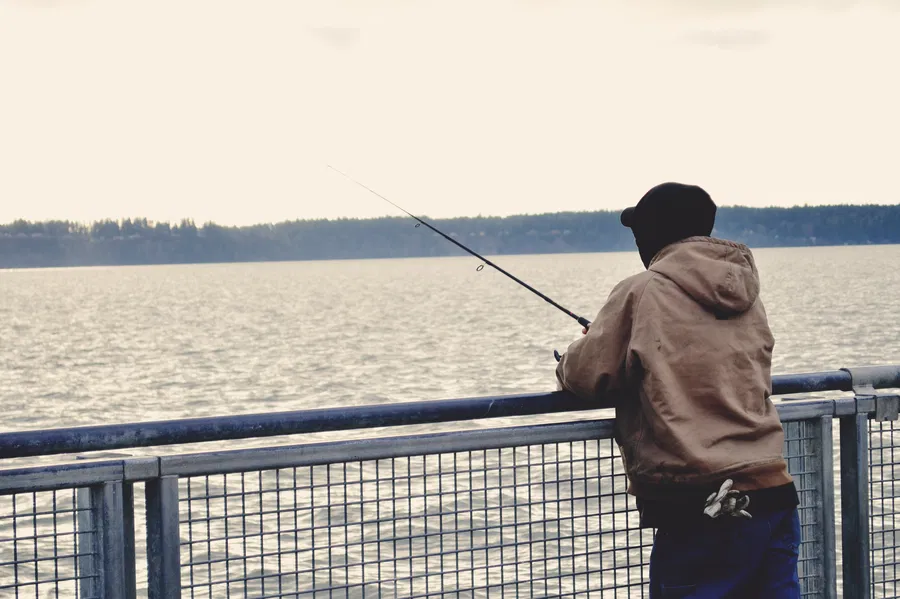

If you’ve ever stood by the water thinking, “What am I doing wrong?” — you’re not alone.
Almost every beginner reaches a point where the excitement of the first few trips turns into quiet frustration. The gear seems fine. The knots hold. The casts look decent. And yet, nothing bites.
It’s easy to assume the fish just aren’t there. Or that you picked the wrong lure. Or that you simply “don’t have the touch.”
In reality, most beginners don’t struggle because of one big mistake. They struggle because of small, unnoticed details that stack together — positioning, timing, presentation, patience. None of them dramatic. All of them important.
The encouraging part? These are fixable problems.
Let’s start with the most common one. And if you want the full “from first cast to first fish” roadmap in one place, the Fishing Basics Guide ties the fundamentals together so troubleshooting doesn’t feel random.
You’re Fishing Where Fish Aren’t#
It sounds obvious, but this is the number one reason beginners go home empty-handed.
Fish do not distribute themselves evenly across a lake, pond, or shoreline. They relate to specific areas that provide food, safety, shade, current breaks, or depth changes. If your bait isn’t near those areas, you can make technically perfect casts all day and still get no results.
Fishing is not just about putting something in the water. It’s about placing it where fish are already inclined to spend time.
No Structure, No Activity#
Fish are strongly connected to structure. Weed lines, rocks, submerged logs, docks, drop-offs, overhangs — these are not random decorations in the water. They are feeding zones and protection zones.
Structure provides ambush points and breaks up current. It concentrates baitfish and insects. It gives larger fish a place to hide while they wait for an easy meal.
Beginners often cast into open water simply because it looks clean and accessible. Open water is easy to reach and comfortable to fish, but it’s frequently unproductive.
If nothing about the area looks interesting — no edge, no depth change, no cover — there’s a good chance fish don’t find it interesting either.
Shifting your cast toward structure, even slightly, can dramatically increase your odds.
Standing Where It’s Comfortable Instead of Strategic#
Another common beginner habit is choosing a fishing position based on convenience rather than logic.
Flat ground, easy footing, wide casting space — these feel safe and comfortable. But fish are not influenced by how comfortable your stance is.
Sometimes the better angle requires moving down the bank, adjusting your position, or casting from a slightly less convenient spot to reach a productive edge.
Strategic positioning often matters more than lure choice. A simple bait placed near structure will usually outperform an advanced lure thrown into empty water.
If you’re not getting bites, don’t immediately change your gear.
First, look at where you’re standing.
You’re Fishing at the Wrong Time#
Timing matters more than most beginners realize.
You can be in the right spot, using the right setup, making clean casts — and still struggle simply because the fish aren’t actively feeding at that moment.
Fish behavior changes throughout the day. Light levels, water temperature, and pressure all influence activity. When you fish can be just as important as how you fish.
Midday Slowdowns Beginners Don’t Expect#
Many beginners fish when it’s most convenient: late morning to early afternoon. The weather feels pleasant, visibility is great, and there’s no rush to wake up early.
Unfortunately, that’s often when fish activity slows down — especially in warmer months.
As the sun rises higher, light penetrates deeper into the water. Fish that were feeding in shallow areas early in the day may move toward deeper water, shade, or heavier cover. In clear water, they can become more cautious and less aggressive.
This doesn’t mean midday fishing is impossible. It simply means you may need to adjust — fish deeper, target shaded areas, slow your presentation.
If you keep fishing shallow open water at noon the same way you would at sunrise, the results may feel disappointing.
Why Early and Late Hours Change Everything#
Early morning and late evening are often called “prime time” for a reason.
During these periods, light is lower, water temperatures are more stable, and fish are more comfortable moving into shallower areas to feed. Baitfish become active. Predatory fish follow.
For beginners, these windows can be dramatically more forgiving. Mistakes in presentation matter less when fish are actively feeding.
If you’ve struggled during the middle of the day, try shifting your schedule. Even an hour before sunset can feel like a completely different lake.
Fishing isn’t only about technique.
Sometimes it’s about choosing the moment when fish are already inclined to cooperate.
Your Presentation Doesn’t Look Natural#
Even when you’re in the right spot at the right time, fish won’t bite if what you’re offering looks wrong.
Fish react to movement patterns they recognize. Injured baitfish don’t move in perfectly straight lines. Worms don’t teleport through the water. Prey rarely behaves like it’s being pulled by a string.
If your presentation feels mechanical or rushed, fish may follow — but not commit.
This is where beginners often lose opportunities without realizing it.
Retrieving Too Fast#
One of the most common mistakes is reeling immediately and continuously after the cast.
The lure lands, and the retrieve starts at full speed.
Sometimes that works. Often, it doesn’t.
Many fish strike on the drop or during a pause. If you retrieve too quickly, you remove that natural moment when the bait appears vulnerable.
Slowing down your retrieve — especially in cooler water or low-activity conditions — often increases bites dramatically.
If you’re not catching fish, try reducing your speed before changing everything else.
Moving the Bait Too Predictably#
Fish notice patterns.
If your lure moves at the exact same speed, in the exact same straight line, every cast, it begins to look unnatural. Real prey hesitates. It changes direction. It pauses unexpectedly.
Adding small variations — a brief pause, a slight twitch, a change in retrieve speed — can trigger reaction strikes.
You don’t need complicated techniques. You need subtle adjustments.
Natural movement looks imperfect.
And that’s what makes it believable.
Not Letting It Sink or Settle#
Some beginners retrieve the lure before it has time to reach the strike zone.
If fish are holding near the bottom and your bait never gets there, you’re effectively fishing above them.
With soft plastics, jigs, or even some live bait setups, letting the presentation sink and settle before moving it can be the difference between zero bites and consistent action.
Patience here matters.
If your bait never reaches where fish are feeding, they can’t respond — no matter how good the lure looks.
Your Gear Is Working Against You#
Sometimes the problem isn’t where you’re fishing or how you’re presenting the bait.
It’s the setup itself.
Beginners often assume that if something looks strong, durable, or “pro level,” it must increase their chances. In reality, mismatched gear quietly reduces bites, weakens hook sets, and causes lost fish — often without obvious warning.
When you’re not catching fish, it’s worth asking a simple question:
Is my equipment helping me… or fighting me?
Line That’s Too Thick or Visible#
Thicker line feels safer. It looks strong. It gives confidence.
But in clear water, heavy line can be more visible than you think. Cautious fish may inspect your bait and back off at the last second.
In addition, thick line affects lure action. It reduces natural movement and slows sink rate.
Using line that matches the size of fish and water clarity makes presentations more believable. For many beginner freshwater situations, lighter monofilament is often more forgiving and less intrusive.
Stronger is not always smarter.
Rod and Reel Too Heavy for the Situation#
Heavy gear dampens sensitivity.
If your rod is too stiff and your line too thick for small or cautious fish, you may not feel subtle bites at all. The rod won’t load properly, and light strikes can go unnoticed.
On the other hand, overly powerful setups can make your presentation look unnatural and reduce casting accuracy.
Balanced gear increases control and feel. If your rod feels like it barely bends and your line feels like rope, it may be time to scale down.
Drag Set Incorrectly#
Drag is rarely the first thing beginners check — and it should be.
If the drag is too tight, a sudden run can break your line before you react. If it’s too loose, you may struggle to set the hook properly.
Test your drag before casting. Pull line by hand and feel the resistance. It should release under strong pressure but not slip too easily.
Proper drag doesn’t guarantee fish.
Improper drag guarantees problems.
Dull Hooks You Didn’t Notice#
Hooks dull faster than many beginners realize — especially after hitting rocks, docks, or hard structure.
A dull hook can penetrate poorly, even with a solid hook set. You might feel the fish briefly… and then it’s gone.
Check your hook point occasionally. If it doesn’t catch lightly on your fingernail, it may need sharpening or replacing.
Sometimes the reason you’re not landing fish isn’t complicated.
It’s sharpness.
You’re Missing the Bite#
Sometimes the fish did bite.
You just didn’t recognize it.
Beginners often imagine a bite as a dramatic yank — the rod bending sharply, the reel screaming. In reality, many bites are subtle. A light tap. A slight hesitation. A feeling that something is “different.”
If you’re waiting for a clear, obvious signal every time, you may be missing opportunities without even realizing it.
Confusing Bottom With a Fish#
When fishing near the bottom, especially with soft plastics or weights, it’s common to feel contact with rocks, sand, or debris.
To a beginner, that contact can feel exactly like a bite — or worse, a real bite can feel like just another bump on the bottom.
The difference often lies in tension and rhythm.
Bottom contact usually feels steady and consistent. A fish bite often feels alive — a quick tap, a sudden softness, or unexpected resistance.
If something feels slightly unusual, even if you’re unsure, it’s often worth reeling down and applying controlled pressure.
Experience sharpens this instinct, but attention accelerates it.
Setting the Hook Too Late#
Hesitation is just as common as overreaction.
You feel a tap. You second-guess it. You wait for confirmation.
Meanwhile, the fish drops the bait or moves on.
With many lure presentations, especially moving baits, the window for a solid hook set can be brief. If your line suddenly feels heavy or your retrieve changes unexpectedly, that’s often your cue.
A clean sequence helps: Reel to remove slack. Create tension. Then lift firmly.
Confidence improves timing. And timing improves results.
Not every missed fish is about technique.
Sometimes it’s about recognizing the moment.
You’re Spooking the Fish#
Fish don’t just react to what’s in the water.
They react to what’s happening above it.
Beginners often focus entirely on bait and technique, forgetting that fish are highly sensitive to vibration, sudden shadows, and unnatural disturbances. In clear or shallow water, they can see more than you think — and hear more than you expect.
If you’re not getting bites, sometimes the problem isn’t your lure.
It’s your presence.
Loud Casts in Shallow Water#
A heavy splash in deep water might not matter much.
In shallow, clear water, it can send fish scattering.
Beginners often cast hard to gain distance, but that extra force can cause the lure to hit the surface loudly. In pressured areas, fish quickly learn to associate sudden impacts with danger.
A smoother, controlled cast that lands softly often increases your chances — especially when targeting fish in calm conditions.
Distance impresses people.
Soft entries impress fish.
Shadows and Sudden Movements#
On bright days, your shadow may stretch over the water without you noticing. Sudden movements along the bank can also alert fish.
In clear water, fish can see silhouettes and motion above them. Quick steps, abrupt arm movements, or standing too close to the edge may push them deeper or into cover.
Approach quietly. Stay a step back from the shoreline when possible. Keep movements deliberate and calm.
Fishing rewards subtlety more than speed.
Too Much Bank Noise#
Sound travels efficiently through water.
Heavy footsteps on docks, dropped tackle, banging coolers — these vibrations transfer directly into the water column.
Beginners sometimes assume fish can’t hear them. Fish absolutely can feel vibration.
Minimize unnecessary noise. Place gear down gently. Walk lightly near the edge.
If fish are present but inactive, reducing disturbance can make the difference between a quiet afternoon and steady action.
Sometimes the key adjustment isn’t technical.
It’s behavioral.
You Change Lures Too Often#
When nothing happens for a few casts, the instinct is to switch.
Different color.
Different size.
Different style.
Repeat.
It feels productive. It feels like you’re “doing something.” In reality, constant changes often prevent you from learning what’s actually happening.
Every lure needs time in the water. Fish need time to notice it. You need time to adjust your retrieve and placement.
If you switch every few minutes, you’re not testing anything — you’re restarting.
No Time for Fish to Commit#
Fish don’t always strike instantly.
Sometimes they follow. Sometimes they inspect. Sometimes they need the right angle or retrieve speed before committing.
If you pull the lure out and replace it too quickly, you may be abandoning a setup that was about to work.
Give each lure a fair trial:
- Change casting angles.
- Vary retrieve speed.
- Adjust depth slightly.
If conditions clearly suggest a change, make one deliberately — not impulsively.
Consistency builds feedback.
Constant switching builds confusion.
Fishing often rewards patience more than creativity.
You’re Not Adjusting to Conditions#
Water conditions are never static.
Light changes. Wind shifts. Temperature rises or drops. Current increases or slows. And when conditions change, fish behavior changes with them.
Beginners often fish the same way all day, even when the environment clearly shifts. They stick to one depth, one angle, one retrieve — hoping consistency alone will solve the problem.
Adaptation is what separates random casting from intentional fishing.
Ignoring Wind Direction#
Wind isn’t just an inconvenience.
It moves water, concentrates baitfish, and creates feeding opportunities. In many lakes and ponds, wind pushes surface food and small prey toward one shoreline, attracting larger fish.
Fishing the windy side of a body of water can sometimes produce more bites than the calm side.
At the same time, wind affects casting accuracy and presentation. You may need to adjust lure weight, casting angle, or retrieve speed to maintain control.
Instead of fighting the wind, use it as information.
Fishing the Same Depth All Day#
Fish don’t stay at one depth from sunrise to sunset.
Early in the day, they may move shallow to feed. As light increases, they often shift deeper or seek shade and cover.
If you’re only fishing near the surface — or only along the bottom — you may be missing where fish are actually holding.
Changing depth can be as simple as:
- Letting the lure sink longer
- Using a slightly heavier weight
- Targeting deeper structure
If you haven’t caught anything for a while, adjust vertically before assuming there are no fish.
Sometimes the difference between zero bites and steady action is just a few feet.
You Expect Every Cast to Produce#
This one is quiet, but powerful.
Beginners often step onto the bank with the expectation that action should happen quickly. If nothing bites within the first few casts, doubt creeps in. After ten minutes, frustration follows.
Fishing doesn’t work like that.
Even in productive water, fish bite in windows — not on demand. You might get three strikes in five minutes and then nothing for half an hour. That doesn’t mean the spot is dead. It means you’re between patterns.
Patience isn’t passive in fishing. It’s active observation.
Fishing Is Patterns, Not Instant Results#
Successful anglers don’t judge a trip by a single cast. They look for patterns.
- Are bites coming from a specific depth?
- From shaded areas?
- On slower retrieves?
- After pauses?
When you expect every cast to produce, you miss the bigger picture. When you look for patterns, you begin to understand what the fish are responding to.
Fishing rewards those who gather information.
One quiet stretch doesn’t mean failure. It’s part of the data.
Once you stop expecting immediate results and start looking for trends, your confidence stabilizes — and your results often follow.
You’re Overthinking It#
At some point, every beginner falls into this trap.
You watch a few videos. You read a few forums. You learn about specialized rigs, advanced retrieves, seasonal transitions, water temperature charts, pressure systems.
Suddenly, fishing feels like a science project.
Knowledge is good. Overcomplication is not.
When you try to apply advanced tactics before mastering the basics, everything becomes noisy. Instead of focusing on location, depth, and presentation, you’re juggling techniques you don’t yet fully understand.
And ironically, that often reduces your success.
Watching Advanced Techniques Too Soon#
Advanced techniques assume strong fundamentals.
If casting still feels inconsistent, if knot tying isn’t automatic, if bite detection is still developing — layering complex methods on top only increases confusion.
Beginners sometimes believe they need “secret techniques” to start catching fish. If you want quick, clean answers to the questions that keep triggering that spiral (lures, line, depth, timing, hooks), the Beginner Fishing FAQ keeps it simple and removes the guesswork.
They don’t.
They need:
- Better positioning
- More patience
- Cleaner presentation
- Simple, consistent execution
Master simple first. Complexity can wait.
Forgetting That Simple Often Wins#
A balanced spinning combo.
A basic knot.
A natural retrieve.
A thoughtful cast near structure.
That setup catches fish.
You don’t need five rods, ten lure styles, or constant tactical changes to improve your results. Often, the simplest approach — done consistently and intentionally — outperforms a complicated one done nervously.
Fishing rewards clarity.
When you reduce variables and focus on fundamentals, improvement accelerates.
Not catching fish is frustrating — but it’s rarely mysterious.
In most cases, it’s a combination of small, fixable factors: positioning, timing, presentation, awareness, patience.
You don’t need better luck.
You need better adjustments.
Move a few steps. Slow your retrieve. Change depth. Stay longer. Pay attention.
Fishing progress rarely comes from dramatic changes. It comes from steady refinement.
And once you start making those refinements, you’ll notice something interesting:
The lake didn’t change.
You did.